
How to Check for a Warrant in Nevada
A warrant check in Nevada starts with the court tied to the event. There is no statewide name search. The Nevada Criminal Justice Information System (NCJIS) serves authorized criminal-justice users only. The Department of Public Safety's Records, Communications and Compliance Division (RCCD) manages it. Public court portals can help locate a case. Each portal serves only named courts, though, and may omit warrant papers. For a current answer, call that court's clerk or marshal. A sheriff or another agency may serve the order. The court controls the case and its terms. Work from the paperwork first. A ticket, citation, summons, release sheet, or prior notice often names the court and a case number. If those details are missing, pin down the county or city tied to the event, then ask which court holds the file. Nevada warrant records may sit in District, Justice, or Municipal Court. Those records are not interchangeable.
- Read any citation, court notice, or release paper for the case number, court, county, and next date. Note whether it names a city court or a Justice Court.
- Search the official portal for that court if one is available. A Nevada public court search is a local case tool, not a statewide warrant search.
- Call the issuing court clerk or marshal to ask whether a warrant is active, what appearance or payment steps apply, and which office serves it.
- If the court directs you to the sheriff, constable, marshal, or jail, use the contact listed by that court. A general records desk may not handle warrant status.
- For records held by an executive agency, make a focused Nevada Public Records Act request under NRS Chapter 239. Court files follow separate judicial access rules.
- If the matter is a traffic ticket, ask the court about its case status and check DMV separately for a license suspension. DMV status does not confirm a warrant.
- When you do not know the court, open the Nevada county directory and route by county, then identify the District, Justice, or Municipal Court.
No Public Nevada Warrant Search
Nevada keeps a statewide criminal-justice repository. The public cannot query it. DPS's RCCD administers NCJIS and its warrant component, called eWarrant. The system supports authorized agencies only. Anonymous name checks are off limits. NCIC reports are restricted too. Nevada DPS and Parole and Probation link to selected fugitive programs, yet neither program is a complete list of Nevada court warrants. The public route runs through the courts. Nevada Judiciary portals cover particular courts, and a docket event may appear there without the underlying warrant paper. No public NCJIS form, searchable county menu, coverage map, statewide warrant total, or list of participating courts exists. A blank search result, then, cannot establish that no Nevada warrant exists. Start with the court named on the case paper. When that court is unknown, use the county directory. The Nevada DPS Most Wanted program page gathers selected fugitive investigations from the agency rather than every court warrant in the state.
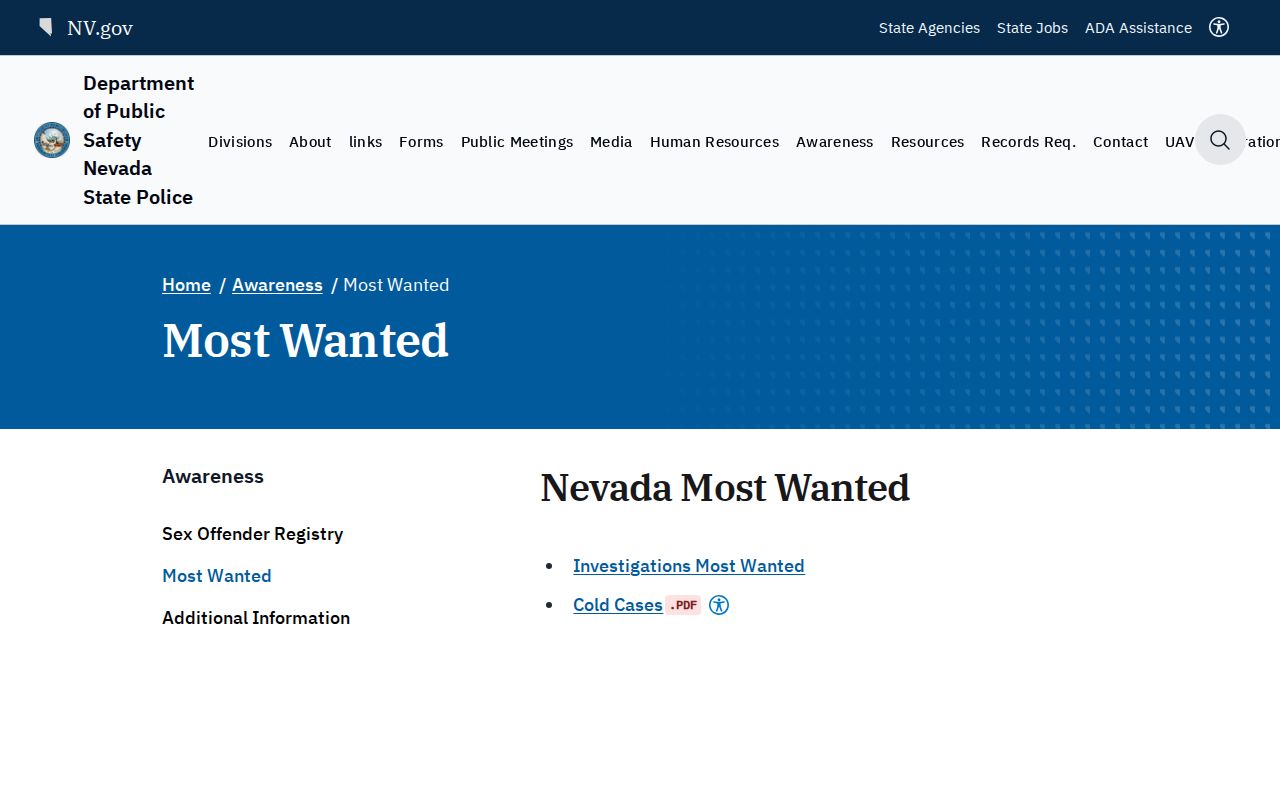
That DPS page helps identify an official agency resource. Its selected cases cannot confirm another Nevada warrant. Note: NCJIS is a law-enforcement repository, while the public route for a Nevada warrant remains the court that issued it.
The Nevada Statewide Warrant System
NCJIS is the Nevada Criminal Justice Information System. The state runs it as its statewide system. DPS's Records, Communications and Compliance Division (RCCD) administers it as the state CJIS agency. The warrant repository supports criminal-justice work. Public name searches are not part of it. The Nevada Administrative Office of the Courts describes a link from court case systems through the IJIS Broker to the DPS-managed repository. That exchange helps agencies share warrant data. It does not hand the public a complete statewide warrant list. Coverage details stay unpublished. Which courts, agencies, warrant types, older records, or counties are included is not stated for every part of the repository. Justice and Municipal Courts keep their own case dockets. The agency that serves a Nevada warrant may also hold service or custody records. No proof exists that every Nevada court sends every warrant. Learn how the Nevada warrant system handles this state-level flow. Then confirm your own case with its issuing court.
| Record Channel | What It Holds | Public Route |
|---|---|---|
| NCJIS warrant repository | Authorized criminal-justice warrant data managed through DPS/RCCD; public coverage is not listed. | No public name search. Ask the issuing court about a case. |
| NCIC / Nlets | Restricted interstate and federal law-enforcement queries or data exchange. | Not open to public query; use the court or responsible agency. |
| District Court file | District Court case records, including felony matters within that court’s jurisdiction. | Use that District Court’s official records route and clerk. |
| Justice or Municipal Court file | Local traffic, misdemeanor, city ordinance, preliminary felony, and related case records. | Use the issuing court’s own portal, clerk, or marshal. |
How Nevada Court Warrants Reach NCJIS
A Nevada warrant starts with a judicial officer who has authority over the case. The court creates the case record. It then directs service through the assigned agency. A county sheriff, constable, Municipal Court marshal, police officer, or another authorized peace officer may carry it out, depending on the court and matter. A Nevada court-system connection can then pass warrant data through the IJIS Broker to the DPS repository. An authorized setup may also send information to NCIC. Nevada publishes no list showing every court's participation in the warrant system. Warrant categories in the system are likewise unpublished. When a judge recalls or quashes an order, the court or the responsible agency updates its records. A change may then flow through the operational system. A paid case, a changed law-enforcement status, and a restored DMV license can be separate events. The court remains the source for the order. Its conditions come from there too. The public cannot access Nevada's NCJIS or NCIC. For a Nevada case, call the court that issued the warrant and ask whether the service record has received the update. Note: an electronic link between court and state systems is evidence of data exchange, not proof of full public coverage.
Types of Warrants in Nevada
Nevada courts work with a handful of warrant terms, and the docket tells you which one applies. An arrest warrant is the classic form. It commands peace officers to take a person into custody and bring them before a magistrate. A bench warrant, often called an FTA warrant, follows a missed court date or another ignored court order. It is not a new charge. A search warrant is different again. It authorizes officers to search a place or seize items, not to arrest the person living there. Nevada paperwork leans on labels like "bench warrant," "warrant of arrest," and "FTA warrant," while "capias" is not a term the state's own records use.
| Warrant or Process | How It Arises | Who Issues It |
|---|---|---|
| Arrest warrant | A complaint or affidavit supports probable cause for an offense under NRS Chapter 171. | A magistrate in the court with authority over the case. |
| Bench / FTA warrant | A person misses an appearance or fails to meet a court order when a warrant is allowed. | The court handling that case. |
| Search warrant | A court authorizes a search or seizure under the governing criminal procedure. | A judge or magistrate with authority over the request. |
| Child-support bench warrant | A qualifying failure to appear after proper notice in a support proceeding. | The court or judicial officer handling the support matter. |
| Civil traffic default | A covered civil infraction receives a civil judgment after the required response is missed. | The court enters a civil default; it is not an arrest warrant under the rule. |
Note: A Nevada search warrant targets a place or item, not a person, and it is not a public wanted notice or an arrest order.
Nevada Courts Issue Warrants at Three Levels
Three trial-court levels matter for any Nevada warrant search. The Nevada District Court holds general jurisdiction over felonies. Yet it is not the only court with power to issue a warrant. Nevada's 40 Justice Courts take traffic and misdemeanor cases plus preliminary felony proceedings. The state's 17 Municipal Courts handle city traffic, ordinances, and misdemeanors. So a city ticket can live in Municipal Court while the county Justice Court runs the public search portal nearby. A District Court docket alone may never show it. The Nevada Judiciary's 2025 court overview adds 11 judicial districts and 90 District Court judges to the picture. Those are structure numbers, not warrant counts. Each tier keeps its own records. A felony case might carry a Justice Court preliminary file and a later District Court case. A municipal case stays with the city court unless another proceeding changes things. The District Court Clerk serves District Court records, and every Justice Court and Municipal Court keeps its own clerk. Under NRS 3.250, the county clerk is ex officio District Court Clerk, though the public-facing office name varies by county. For your own Nevada warrant, go to the court named on the citation or notice, not whichever building happens to be close. If the case crossed tiers, ask the clerk whether each file carries its own order. The Nevada Judiciary court overview lays out these levels and the current published counts. Note: The 11 judicial districts, 40 Justice Courts, and 17 Municipal Courts describe Nevada's 2025 court structure, not its warrants.
Why Nevada Searches Miss Warrants
A Nevada case search can show the case yet hide the warrant itself, along with its service status. The Judiciary's access rules put NCJIS and NCIC reports off limits to the public. Bench-warrant papers are generally confidential too, apart from a narrow judge-signed cover-sheet exception under the applicable rule. Juvenile records carry their own protections. A docket event may be public while the papers behind it stay sealed from view. Local portals have narrow reach as well. A city Municipal Court search does not sweep in Justice Court cases. A multi-court Justice Court portal does not prove every Municipal or District Court is inside it. A record can be new, delayed, sealed, or simply sitting with a court whose page you never opened. Nevada's state repository does not close that gap, because the public cannot query it. For someone checking their own status, a blank Nevada warrant search is a reason to call the issuing court, never an all-clear. Hand the clerk a case or ticket number if you have one. Ask which court controls the order, whether it stays active, and what would resolve it. A family member can help gather paperwork. But the court may limit what it tells someone who is neither a party nor counsel. Note: A public docket, a bench-warrant paper, a custody record, and an NCJIS status are separate Nevada records governed by different access rules.
What a Nevada Warrant Record Shows
Nevada law fixes the core contents of an arrest-warrant instrument, but no single statewide display format exists. Under NRS 171.108, the magistrate's signature and name must appear. So must enough identification of the defendant, the issue date and place, the offense charged, and a command to bring the person before the nearest available magistrate. Those are legal requirements for the paper, not promises about a public search result. Nevada publishes no statewide warrant-number pattern or uniform status code list. A local docket can still be useful. It may show a case number, party name, next date, warrant flag, amount due, or court. Henderson Municipal Court says its Active Warrant List includes warrant type and bail amount. Those fields belong to that one list, though. Treat them as a local practice, not a Nevada-wide display standard. Ask the issuing court what it can release and how to confirm an active warrant status.
| Warrant Number | No single Nevada public number format was located. Use the court case or citation number shown on the paperwork. |
|---|---|
| Person Details | NRS 171.108 requires enough identifying information in an arrest warrant; the public display may be narrower. |
| Charge / Offense | The arrest-warrant statute requires the offense charged. A docket label may use a shortened local description. |
| Issuing Court | The court controls the order. District, Justice, and Municipal Court files are separate. |
| Bail or Bond | There is no single Nevada warrant-bail schedule. Amount and allowed method depend on the court’s order. |
| Status | No uniform public status codes or update cadence were found. Confirm active, served, recalled, or quashed status with the court. |
Nevada Traffic Warrants and DMV Suspensions
Miss a Nevada traffic date and three different things can follow, and none of them is the same record. One is a warrant from the court. Another is a civil default judgment. A third is a Nevada DMV license suspension. Only the Justice or Municipal Court handling the case decides whether a warrant issues there. For qualifying Nevada traffic citations, NRS 483.465 creates a separate court-to-DMV notice path, so the court notifies and the DMV then acts on the license. The DMV never searches for or recalls court warrants; it manages license status after the required notice. Nevada's Civil Traffic Infraction Rules, effective November 5, 2024, changed the picture again. Covered allegations now run through a civil-default process, and the rule bars an arrest warrant for failure to appear or satisfy that judgment. Not every case is covered. Criminal traffic charges and many older Nevada cases sit outside it. Earlier Nevada legislation addressed certain older warrants tied to newly decriminalized infractions, but it did not cancel every warrant with a traffic number attached. So the charge, the court, and the citation date decide what you actually face. A ticket is not automatically a warrant. A DMV suspension does not prove one exists either. Once the court case is resolved, the Nevada DMV court-related suspension page explains how a court clearance letter or report supports license reinstatement, but that page is not a warrant lookup, and a restored license does not confirm that another warrant was recalled. Note: after a Nevada traffic case ends, check court status and DMV license status through their separate official channels.
Public Access to Nevada Warrant Records
The Nevada Public Records Act, NRS Chapter 239, opens many executive-branch and local government records, while courts follow a separate judicial access framework. Send each Nevada request to the office that actually holds the record. That means DPS for releasable DPS material. It means a court clerk for a case file. A sheriff or other law-enforcement agency keeps its own records. A request can obtain an existing record, but it cannot force a public NCJIS search or a warrant-status report. Access rules also shield certain case details. NCJIS and NCIC reports count as nonpublic criminal-justice information. Bench-warrant paperwork stays confidential under the statewide access rule, except for the limited judge-signed cover sheet described there. Juvenile justice information carries its own restrictions under NRS Chapter 62H. Search-warrant documents may be public unless a court seals them, and the supporting affidavit can carry a separate seal. Ask the issuing court which document or docket item is available in your Nevada case.
Nevada Access Rules
NRS Chapter 239 sets the executive-branch public-record request path and its statutory limits.
Nevada Supreme Court public-access rules distinguish public docket material from restricted bench-warrant paperwork and NCJIS/NCIC reports.
NRS Chapter 62H protects juvenile justice information from general public access.
Nevada Warrant Rules Changed in 2024
Two traffic changes shape many Nevada warrant questions involving an old or recent ticket. The Nevada Civil Traffic Infraction Rules took effect on November 5, 2024. For covered civil infractions alleged on or after that date, a missed response can lead to a civil default judgment, yet the rule bars an arrest warrant for failing to appear or satisfy that judgment. The ticket's classification and date control the outcome. Criminal traffic cases do not become civil ones under the rule. The Nevada Civil Traffic Infraction Rules lay out the current civil process. Then there is the earlier cleanup law. In 2021, Nevada AB 116 targeted a defined set of bench warrants tied to newly decriminalized infractions issued before January 1, 2023. It directed cancellation of those covered warrants and removal of related central criminal-history records as provided by law. No standing amnesty came out of it. Nor did it clear every older warrant in Nevada. Someone holding an old citation should ask the court to review its case rather than assume the law removed the order automatically. The separate Nevada AB 116 text spells out that limited cancellation rule. One final shift touched the plumbing, not public access. The DPS/RCCD NCJIS transition notice scheduled the warrant/eWarrant component's production cutover for September 9, 2024. That was a system change for justice users, not a public portal.
Nevada Support Warrants Have Separate Payment Rules
Support cases follow their own payment rules in Nevada. A bench warrant can issue after a person who received proper notice fails to appear. NRS 425.510 authorizes a judicial officer to issue that kind of order in the setting the law describes. It is still a court warrant. It is not a general child-support debt notice. The support court in Nevada controls the case and the warrant conditions. Nevada's Division of Welfare and Supportive Services (DWSS) serves as an agency contact for support matters, but its payment service is not a public warrant lookup. DWSS does list a one-time child-support payment option labeled for "Bench Warrant, Jail Release and Driver's License." The page requests case and payer identifiers. It lists an $8.95 credit or debit convenience fee per $1,000. That payment path serves support cases only. It cannot pay bail for someone in custody. DWSS says in-custody bail must be coordinated with the enforcing authority and cannot be paid online or by phone. A payment receipt does not prove the court warrant, a separate hold, or a DMV status has cleared. The Nevada child-support statute gives the court its authority for the relevant proceeding. The DWSS payment page shows the support-specific payment route, which must not be confused with bail in a Nevada warrant case.
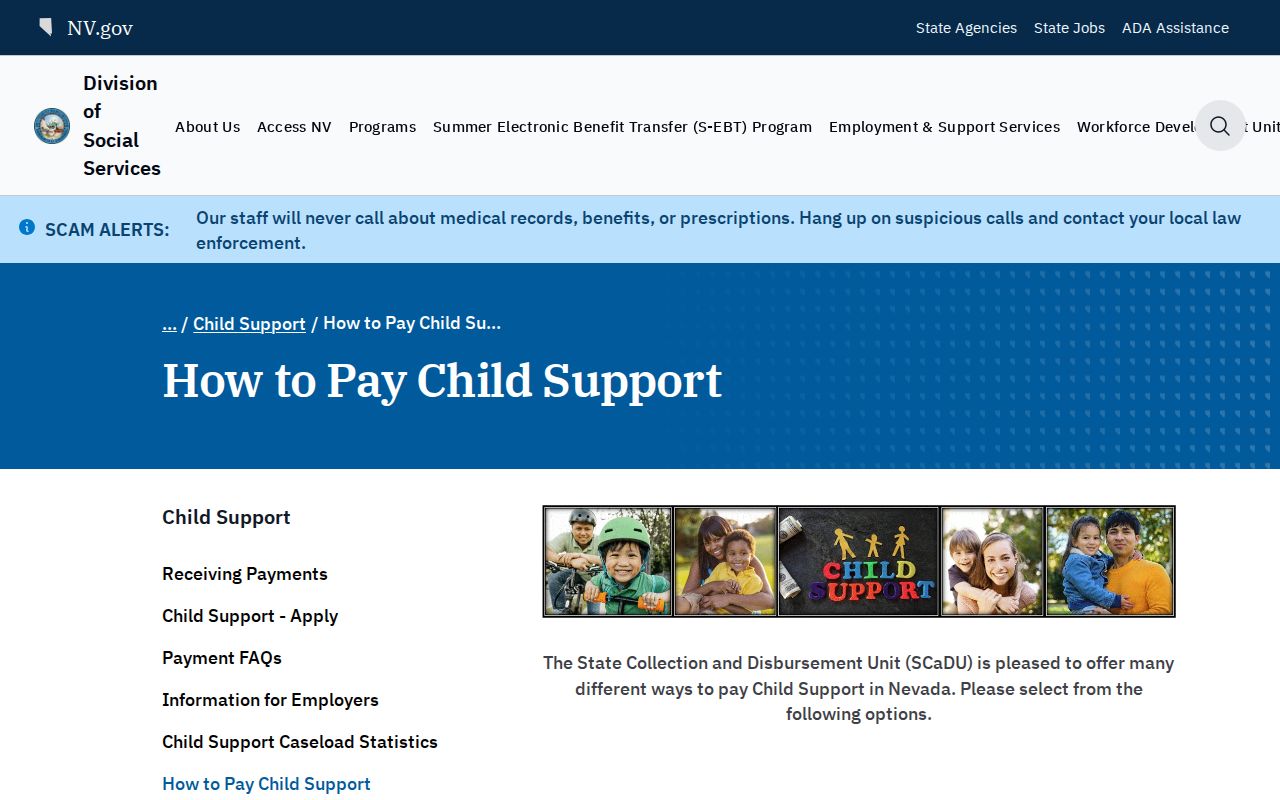
The payment screen documents a Nevada agency payment choice, not the court's current warrant status or any release decision.
Nevada Warrant Terms Vary by Court
Nevada keeps no statewide list of warrant status codes. One court's screen leans on local shorthand; another shows a different label or no public warrant field at all. Work from the order or docket language the issuing court itself uses. The term alone can't tell you whether an order is still active today.
- Bench warrant
- A court order often issued after a missed required appearance or failure to meet a court direction. It stays tied to that court’s case.
- Failure to appear (FTA)
- Missing a required court date. The term does not by itself prove that a warrant issued.
- Recall
- A court action that withdraws a warrant. Ask for the order and confirm that the service record was updated.
- Quash
- A judge sets aside a warrant or process. Filing a motion is only a request; the judge decides it.
- NCJIS
- Nevada’s restricted criminal-justice information system, managed by DPS/RCCD. It is not a public search portal.
Nevada court materials offer no statewide "capias pro fine" label. If your local case uses another term, ask the clerk what the order means and where its status stands now.
What to Do About a Nevada Warrant
Confirm the basics first: which court, what case number, why the order issued, and whether it is still active. Nevada runs no public statewide warrant-status desk, so that answer comes from the issuing court. The clerk or marshal there can walk you through the current procedure. Felony cases that moved from Justice Court to District Court may carry an order in each file, so ask about both. A city ticket belongs to the Municipal Court that took it. A county sheriff may serve the warrant, but only a judge can set conditions or recall it.
- Call the court using the contact details on its official page. Ask whether a warrant is active and what office handles a status check.
- Before visiting, confirm identification needs, counter hours, possible booking, hearing requirements, current bail, and accepted payment methods.
- Ask whether the court allows a scheduled appearance, a request to recall or quash, payment, or another court-approved step. Options vary by court and case.
- If the court orders bail, ask whether it secures release, schedules arraignment, or also meets a case obligation. Bail does not automatically dismiss a charge.
- Keep the signed recall or payment record. Ask when law enforcement receives a status update, then check any separate DMV requirement with the court and DMV.
Reno Justice Court runs a local, eligibility-based traffic warrant program; it is not a Nevada amnesty. No blanket statewide warrant-roundup clearing period exists. If you can't pin down the issuing office, the county directory helps you reach the right court level before you plan a move. A lawyer can assess the case or request relief. The judge alone controls the order.
Find Warrants by County in Nevada
The warrant and case file stay with the issuing Nevada court, while the office that serves the order depends on its terms and local assignment. Carson City sits in this directory as a county-equivalent destination. Begin with the place named on your paperwork, then follow the District, Justice, or Municipal Court route that fits. The six featured destinations below cover Nevada's largest population centers plus the capital area. Their local portals differ in coverage. None of them counts as a statewide warrant search. The U.S. Census TIGERweb Nevada county table lays out county geography with dated 2020 population counts, a locator rather than a warrant record or a current estimate.
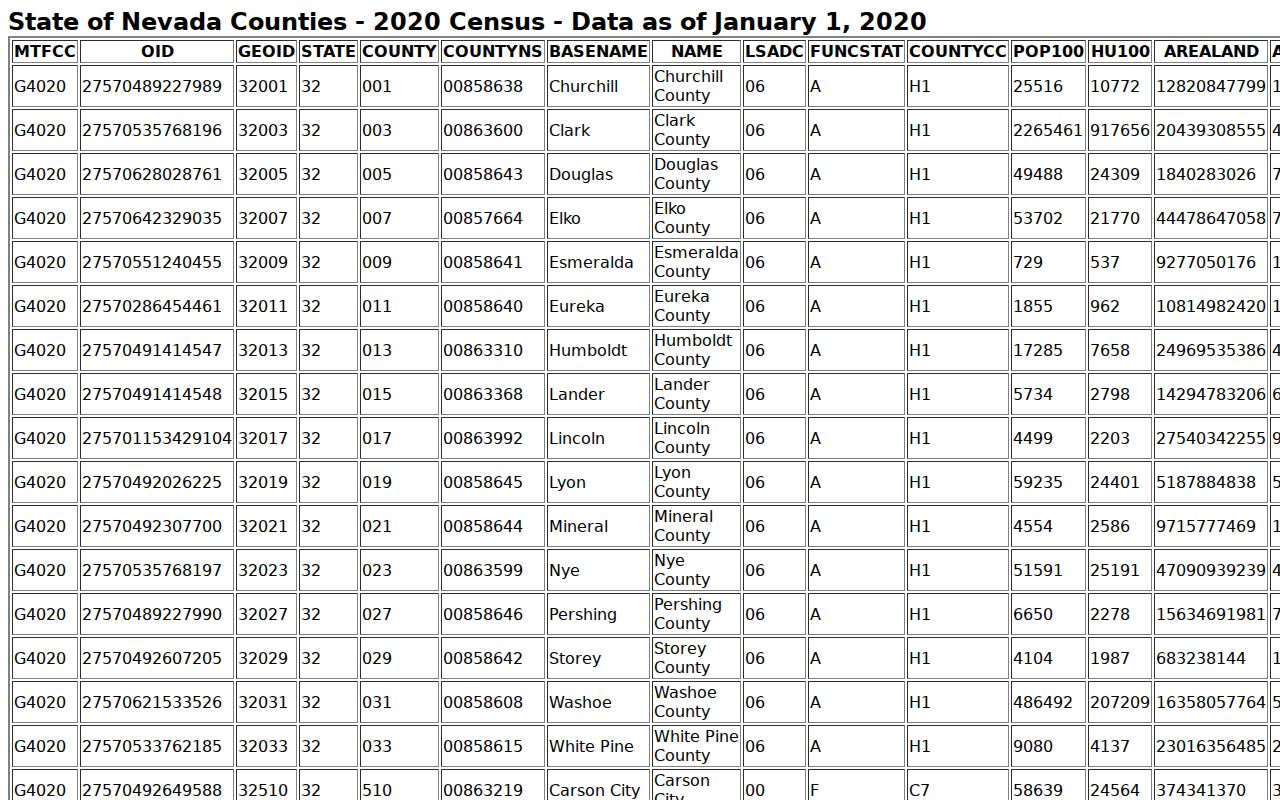
Pull the county or county-equivalent name from your Nevada court papers. Then confirm the exact court before trying any local search or phone route.
Clark County
Las Vegas · Largest by 2020 population, with separate city and county court routes.
Washoe County
Reno · Second-largest by 2020 population; Justice and District Court routes differ.
Lyon County
Yerington · One of Nevada’s six largest county jurisdictions by the 2020 Census.
Carson City
Carson City · County-equivalent and state capital; local court records remain separate from DPS.
Elko County
Elko · Eastern Nevada destination; State Police contacts cover that agency’s own matters.
Nye County
Tonopah · Large rural county with more than one local court or service point.
Open the full directory of all 17 Nevada county and county-equivalent destinations to find the local route for your case.